
Pixel Smash
Speed up
Speed up
Game Details
- Playable on: Browser
- Genre: Destruction Puzzle Clicker
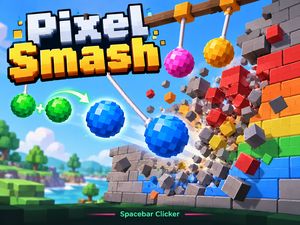
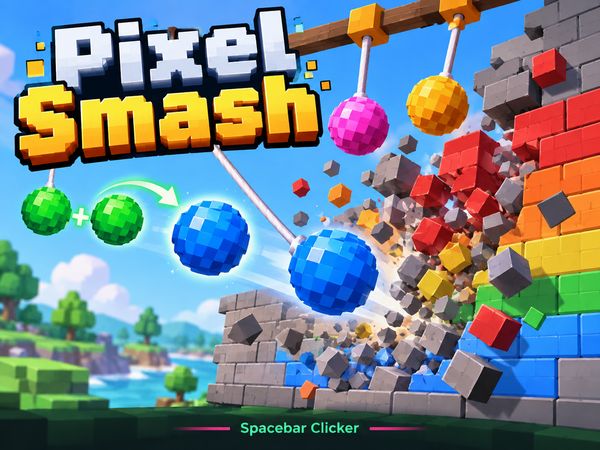
Pixel Smash hooks you the moment a ball crashes into a wall and the whole thing shudders apart, pixel by pixel. This isn't a slow builder game. It's a fast, physics-driven demolition puzzle where merging balls and routing ropes decide how quickly a wall falls.
Every run mixes three ideas into one loop: combine matching balls into stronger ones, guide their path with ropes, and watch dense pixel walls crumble under real impact force. You can play Pixel Smash online right in your browser, and the physics do the rest.
What makes it satisfying is how visible the progress feels. Layers peel away, walls thin out, and stronger merged balls hit harder than the last ones did. Start playing Pixel Smash now and see how fast a wall can go from solid to rubble.
At its core, Pixel Smash is a destruction puzzle clicker built around one goal: bring down pixel walls using balls, ropes, and momentum.
The game runs on a simple combo: merge balls, aim them with ropes, and let physics take over. Matching balls combine into stronger units, and those upgraded balls carry more force when they land. That force is the whole point. Weak, low-tier balls barely scratch a wall's surface. Stronger, merged ones punch straight through outer layers and keep going.
Rope routing adds the aiming layer to all this. Instead of watching balls bounce randomly, you set up ropes to focus their projectile paths toward the parts of the wall you want gone first. This turns a chaotic bounce into a directed strike. Since the whole system runs on physics rather than scripted animations, every bounce, merge, and impact reacts the way you'd expect from real weight and speed.
None of this happens in isolation. Ball merging feeds directly into wall demolition, since a stronger ball is only useful if it's aimed somewhere that matters. That's why the loop feels tight rather than random. You're not just clicking and hoping. You're building toward heavier hits and steering them where the wall is weakest.
Walls in Pixel Smash aren't single flat surfaces. They're built from layers of pixels stacked together, and each layer takes its own share of punishment before it gives way. A single hit rarely finishes the job. Instead, damage builds up across repeated impacts from your merged balls.
This layered setup is what gives the destruction its rhythm. Early hits chip the outer surface. Later hits, especially from higher-tier merged balls, tear through what's left underneath. The physics engine tracks all of this in real time, so a wall that looked solid a few seconds ago can be reduced to scattered pixel debris once enough force lands in the right spots.
These two mechanics work side by side, and neither one does much good without the other.
Ball merging is the engine behind every strong hit in Pixel Smash. Using mouse controls, you combine identical balls into a single, upgraded unit. It sounds simple, and it is, but the payoff is what matters: the merged ball carries far more destructive power than either of the two balls that made it. That extra power isn't cosmetic. It changes how a wall reacts when the ball lands.
Higher-tier balls hit durable pixel walls harder than basic ones ever could. A wall that shrugs off a starting-tier ball will lose whole chunks of pixels to a properly merged one. This is why merging isn't optional if you want fast progress. Stacking identical balls into stronger tiers directly speeds up how quickly layers come apart, which means less time waiting and more time watching walls collapse.
Rope routing is the other half of the equation. Once you've got a strong merged ball, you still need it landing in the right place. Ropes let you shape the path a ball takes before it ever reaches the wall, focusing its projectile route instead of leaving the bounce to chance. Set up ropes well, and a single merged ball can chain through weak points instead of wasting force on a spot that's already thin.
Think of merging as building the hammer and rope routing as aiming it. Skip one, and the other loses most of its value. A top-tier merged ball fired without any routing can still land somewhere useless. A perfectly routed path with a weak ball won't do much damage either. The real progress in Pixel Smash comes from treating both mechanics as one connected system, not two separate tasks.
Controls in Pixel Smash stay minimal on purpose, since the whole game already runs itself once balls start bouncing.
The Space Bar speeds up the action. So does the Left Mouse Button. That's it, and that's really all this game needs, since the physics and merging systems handle the rest automatically once a round is moving.
No control menu to dig through, no remapping screen. You load the page, and both inputs are live immediately. This matters more than it sounds like, since a lot of destruction puzzle games bury basic actions behind menus. Pixel Smash skips that entirely.
Keeping the input list short also keeps the pace up. You're not juggling five different keys while trying to watch a wall's pixel count drop. You're focused on timing your speed-up presses against the moments that matter most.
Both the Space Bar and the Left Mouse Button trigger the same one-click speed acceleration. Press either one, and the demolition action moves faster on screen. There's no separate button for a different effect. It's a single, shared function available through keyboard or mouse, whichever feels more natural in the moment.
That overlap is useful. If your hand is already on the mouse aiming a rope, tapping the button keeps things moving without a reach for the keyboard. Switch to the Space Bar when your mouse is busy elsewhere. Either way, the wall keeps coming apart at a quicker pace.
Try both inputs and see which one fits your rhythm better. Experience Pixel Smash and start chipping away right from your first wall.
Every wall you face is really a stack of smaller problems, and clearing them layer by layer is where the real progress happens.
Dense pixel walls in Pixel Smash don't fall apart from a single lucky bounce. They're built from stacked layers, and each one needs its own share of impacts before it breaks away. The outer layer usually goes first, since it takes the earliest hits from whatever balls you're currently running.
Underneath that first layer sits more resistance, often tougher than what came before. This is where merged, higher-tier balls start to matter more than raw hit count. A handful of strong impacts from an upgraded ball clears more pixels than dozens of weak taps ever could. The wall's structure stays visible the whole time, so you can watch exactly where the damage is landing and adjust your rope paths toward whatever's left standing.
Impact force in Pixel Smash comes down to two things working together: the tier of ball you're using and where it actually lands. A merged, upgraded ball already hits harder on its own. Route that same ball through a focused path, and the force lands exactly where the wall is weakest instead of spreading out randomly.
Skip the merging step, and even a well-aimed shot underperforms. Skip the rope routing, and a strong ball still wastes some of its potential on the wrong spot. Getting both right is what pushes a wall from thinning out toward full collapse.
Not every game carrying the Pixel Smash name plays the same way, so it helps to know which one you're actually looking at.
Everything in this build centers on destruction through physics rather than combat or competition against other players. The wall in front of you is the only opponent, and it responds purely to how well you've merged your balls and aimed their paths. That focus is what separates this release from other games sharing the same name.
Elsewhere, the Pixel Smash name also covers different kinds of games entirely. Some mobile releases lean toward shooter-style action instead of wall demolition. A separate title, Pixel Smash Duel, puts two players against each other in arena combat rather than physics-based destruction. Same name, very different gameplay from the browser build discussed above.
If you're after the merging-and-demolition puzzle style, the browser version is the one to look for. For more physics-driven browser games, check out Crusher Clicker or Satisfying Ball Clicker.
Use Space Bar to speed up. Use Left Mouse Button to speed up.
Launch the game in your web browser and allow the Unity WebGL engine to complete loading.
Click and drag matching balls together to combine them into more powerful demolition units.
Press the Space Bar or hold the Left Mouse Button to speed up ball movement and shatter the remaining wall layers.
Pixel Smash opens in a phone browser, but it is played with the keyboard, so a computer works best.
Keyboard: Space Bar - speed up. Mouse: Left Mouse Button - speed up.
No. Pixel Smash runs in your browser on this page, with nothing to download or install.
Pixel Smash delivers satisfying, straightforward fun through its clever Ball Merging mechanic, letting players combine identical balls with simple mouse controls to create more powerful units. Watching these upgraded balls smash through durable pixelated walls creates a genuinely rewarding destruction puzzle experience that's easy to pick up yet consistently engaging.
The controls keep things accessible: use the Space Bar or Left Mouse Button to speed things up whenever you want to accelerate the action. This browser-based, single-player title strikes a nice balance between strategic merging decisions and the pure pleasure of watching walls crumble under escalating firepower.
If you're ready for some pixel-crushing satisfaction, dive into Pixel Smash right here on this page and start merging your way to total destruction.
No comments yet. Be the first to share your thoughts!